The Quiet Cost of Traveling Alone: How Savvy Executives Are Investing in Companionship as a Wellness Essential
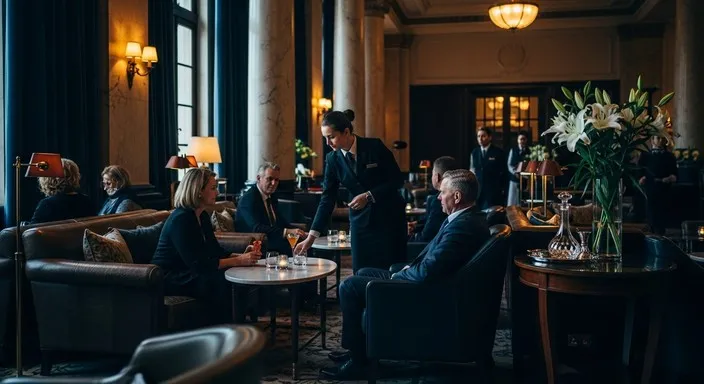
Photo: professional executive relaxing in elegant Prague hotel lounge evening, via images.stockcake.com
The American executive's relationship with business travel has always been complicated. On the surface, it carries a certain prestige — the premium cabin seat, the seamless hotel check-in, the expense account dinner at a Michelin-starred restaurant. Beneath that surface, however, lies a set of psychological realities that the business world has been slow to acknowledge openly: the disorientation of repeated time zone crossings, the cumulative fatigue of unfamiliar environments, and — perhaps most significantly — the persistent, low-grade loneliness that accompanies weeks spent in cities where one knows no one.
For professionals traveling to Prague on extended assignments, these pressures are amplified by the particular character of Central European business culture, which tends to be more formal and less immediately warm than the networking-forward environments many Americans are accustomed to. The result is a kind of social isolation that is easy to dismiss but difficult to ignore — and that has measurable consequences for performance, decision-making, and overall wellbeing.
Reframing Loneliness as a Professional Risk
The corporate wellness conversation in the United States has matured considerably over the past decade. Meditation apps, executive coaching, sleep optimization, and nutrition planning are now standard features of the high-performer's toolkit. What remains curiously underexamined, however, is the role of genuine human connection in sustaining peak professional function.
Research in occupational psychology consistently identifies social isolation as a significant stressor — one that impairs cognitive performance, elevates cortisol levels, and erodes the emotional resilience that demanding careers require. For executives logging ten or more days per month in foreign cities, the cumulative effect of this isolation is not trivial. It compounds across trips, manifesting as irritability, reduced creativity, and a diminished capacity for the kind of nuanced interpersonal engagement that high-stakes business negotiations demand.
Viewed through this lens, the decision to invest in quality companionship during an extended Prague stay is not a personal indulgence. It is a rational response to a documented professional risk.
What Premium Companionship Actually Provides
It is worth being precise about what distinguishes elite companion services from other forms of social engagement available to the traveling executive. A business dinner with colleagues is transactional by nature — every conversation carries professional weight. A hotel bar is anonymous and impersonal. A tourist excursion is distracting rather than restorative.
A well-matched companion offers something qualitatively different: attentive, genuinely personal interaction that requires nothing in return except presence. There is no agenda to advance, no hierarchy to navigate, no performance to maintain. For individuals whose professional lives demand constant strategic self-presentation, the relief of this kind of unguarded company is profound.
The best companion services in Prague — including Prague Companions — understand that the executives who seek them out are not looking for distraction. They are looking for restoration. The distinction is important. Distraction is temporary and ultimately exhausting. Restoration is the process by which depleted psychological resources are replenished, and it requires genuine connection to occur.
Jet Lag, Cortisol, and the Body's Need for Warmth
The physiological dimension of extended travel is equally relevant here. Jet lag is not merely a matter of feeling tired at inconvenient hours. It disrupts the body's hormonal rhythms in ways that affect mood, appetite, immune function, and emotional regulation. The traveler who has crossed multiple time zones and spent three days in back-to-back meetings is operating in a state of genuine physiological stress.
Human warmth — the simple experience of being in the company of someone who is engaged, kind, and genuinely interested — has well-documented effects on stress hormone levels. The presence of a companion who creates an atmosphere of ease and personal attention can, in measurable ways, begin to counteract the physiological toll of demanding travel. This is not sentimentality. It is biology.
For the executive who takes their physical and mental health seriously — who tracks sleep, monitors nutrition, and invests in regular exercise even while traveling — the inclusion of quality social connection in their wellness strategy is a natural and logical extension of that commitment.
The Prague Context: Why Location Matters
Prague presents particular advantages for the executive seeking this kind of restorative companionship. The city's beauty is inherently calming — its baroque architecture, its riverside walks, its quiet inner courtyards — and spending time in genuinely lovely surroundings with a companion who knows and loves the city creates conditions that are naturally conducive to psychological recovery.
Unlike some major European business destinations, Prague also operates at a pace that allows for genuine leisure. An evening that begins with cocktails in a restored Art Nouveau salon and moves through a private dinner in a candlelit cellar restaurant does not feel rushed or performative. It feels, in the best sense of the word, human.
For the American executive who has spent the day in conference rooms and the previous night on a transatlantic flight, this kind of evening is not a reward. It is a necessity.
Building a Smarter Travel Protocol
The executives who derive the most value from companion services in Prague tend to approach the arrangement with the same intentionality they bring to other aspects of their professional lives. They communicate their preferences clearly, they allow sufficient time for a thoughtful match to be made, and they treat the experience as a genuine priority rather than an afterthought scheduled around other commitments.
Prague Companions works closely with clients to understand not only their logistical needs but their emotional and psychological context. A client arriving after a particularly grueling quarter requires something different from one who is traveling in a more relaxed frame of mind. These distinctions inform the matching process and, ultimately, the quality of the experience.
The most sophisticated professionals have already integrated this kind of intentional companionship into their travel framework — not as an occasional luxury, but as a consistent and valued component of how they manage the human cost of a high-demand career. In doing so, they have discovered something that the wellness industry has been slow to articulate: that genuine connection, freely offered and thoughtfully arranged, is among the most effective restorative tools available to the modern executive.