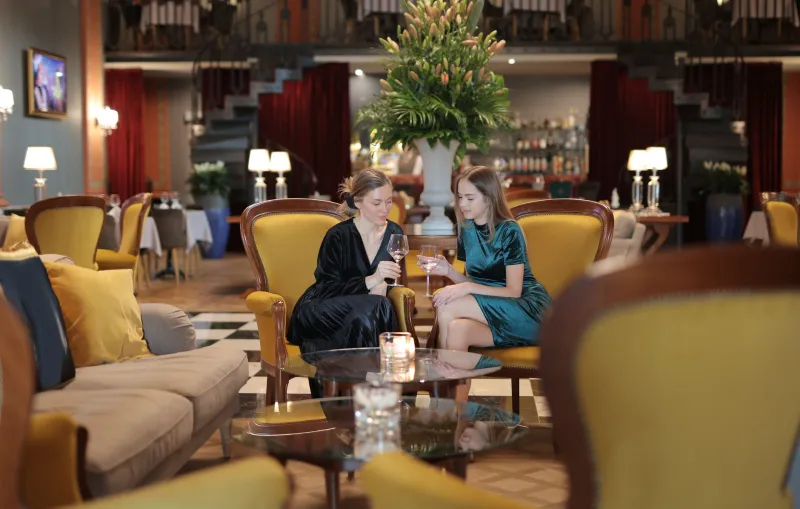
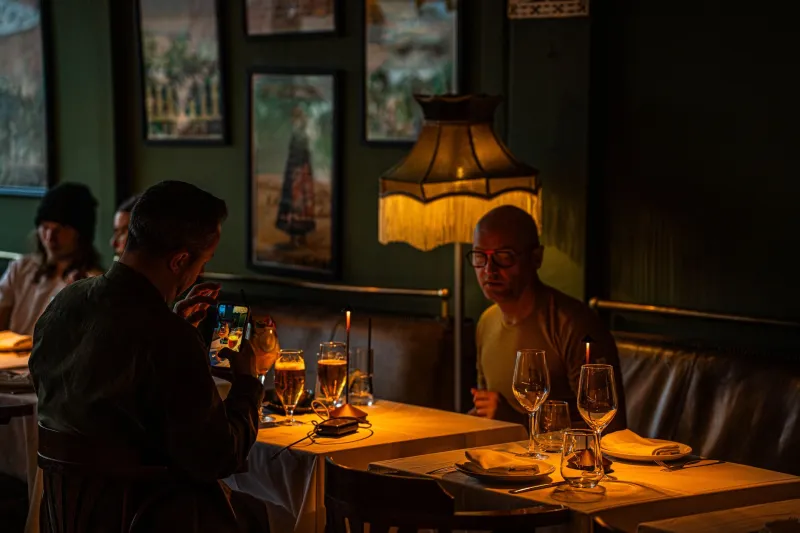
The Isolation Beneath the Achievement: Why Elite Professionals Seek Connection in Prague

There is a particular kind of loneliness that arrives without warning — not the loneliness of failure or obscurity, but the loneliness that settles in quietly after the deal closes, the promotion lands, or the quarterly numbers exceed every projection. For high-performing professionals, this experience is far more common than the culture of ambition would ever acknowledge. It is the paradox at the center of elite achievement: the higher one climbs, the more rarefied the air becomes — and the fewer people remain who truly understand the view.
For executives traveling internationally, this dynamic intensifies. A new city, however beautiful, can feel profoundly impersonal when navigated alone. Prague, one of Europe's most architecturally striking and culturally layered capitals, is no exception. Arriving as a stranger to its cobblestone streets and gilded facades, even the most seasoned traveler can find the experience isolating in ways that accumulate beneath the surface of a packed professional itinerary.
The Hidden Cost of High Achievement
American workplace culture has long celebrated the self-sufficient executive — the professional who needs nothing and no one beyond the next objective. Yet behavioral science has spent decades quietly dismantling that mythology. Studies published in journals ranging from Psychological Science to the Harvard Business Review have established with growing consistency that social isolation is not merely an emotional inconvenience. It is a cognitive liability.
Decision fatigue, reduced empathy, impaired risk assessment, and diminished creative thinking are all documented consequences of prolonged social disconnection. For executives whose livelihoods depend on sharp judgment and nuanced interpersonal skill, these are not abstract concerns. They are operational risks — ones that rarely appear on any risk register but quietly undermine performance nonetheless.
The executive who boards a transatlantic flight to Prague for a week of high-stakes meetings or strategic retreats is, in many cases, already operating on a deficit. Time zone displacement, the compression of back-to-back engagements, and the absence of genuine human warmth in hotel corridors and boardrooms compound an existing vulnerability. What is needed is not more preparation. It is restoration.
Why Prague Functions as a Reset
Prague occupies a distinctive position among European capitals. Unlike London or Paris, which can overwhelm with their scale and relentless pace, Prague offers something rarer: grandeur at a human scale. Its medieval architecture, intimate wine bars, and the unhurried rhythm of its cultural life create an environment that is genuinely conducive to psychological decompression.
For the executive accustomed to the velocity of New York, Chicago, or Los Angeles, Prague's atmosphere can feel almost disorienting in its invitation to slow down. The city does not demand performance. It rewards presence. And it is precisely this quality that makes it an ideal setting for the kind of intentional social engagement that restores what relentless ambition gradually depletes.
The professionals who engage companion services in Prague often describe the experience in terms that go well beyond entertainment. They speak of conversations that reached genuine depth — exchanges that cut through the performative pleasantries of corporate networking and arrived at something more honest. They describe evenings that felt, for the first time in months, unhurried. Mornings that began with a sense of orientation rather than anxiety.
The Science of Strategic Connection
The research framing around social engagement and cognitive performance has matured considerably over the past decade. Neuroscientists have identified the role of oxytocin — sometimes called the "bonding hormone" — in regulating stress response, enhancing trust calibration, and improving the quality of complex reasoning. These are not soft outcomes. They are measurable shifts in executive function that arise from meaningful interpersonal contact.
What the data suggests, and what many high-performing professionals are beginning to accept, is that connection is not a reward for completed work. It is a prerequisite for work done well. The executive who invests in genuine human engagement during a high-stakes international trip is not indulging a weakness. They are practicing a form of strategic self-management that the highest-performing professionals have always understood intuitively, even when they lacked the vocabulary to articulate it.
Elite companion services in Prague are increasingly sought by professionals who understand this distinction. The appeal is not simply the company of an engaging individual — though that alone carries real value. It is the compound effect of sustained, authentic interaction: the gradual unwinding of professional armor, the restoration of conversational fluency, and the return of an emotional register that isolation slowly narrows.
Intentional Companionship as Executive Practice
The language around companionship in professional contexts has evolved. Where once the subject carried the weight of taboo, a growing number of executives are approaching it with the same pragmatic clarity they apply to any other performance-enhancing investment — whether that is executive coaching, mindfulness retreats, or high-performance health protocols.
Prague Companions operates from a straightforward premise: that the professionals who seek elite companionship in this city are, by and large, sophisticated individuals who recognize what they need and are capable of pursuing it with discretion and intention. The platform connects clients with companions who bring not only personal warmth and social intelligence, but genuine cultural fluency — individuals who can navigate the city's finest restaurants, attend cultural events with ease, and sustain the kind of substantive conversation that a high-functioning executive finds genuinely nourishing.
This is companionship calibrated to a specific need — not the manufactured enthusiasm of transactional interaction, but the grounded, attentive presence of someone who is genuinely invested in the quality of the shared experience.
Reclaiming the Human Dimension of Success
The professionals who arrive in Prague carrying the invisible weight of accumulated solitude rarely announce it. It surfaces instead in the way they approach an evening with no agenda — with uncertainty, sometimes with discomfort, occasionally with relief. The city, and the right companion within it, has a way of dissolving that weight without forcing the process.
Success, properly understood, was never meant to be a solitary condition. The executives who perform at the highest levels over sustained careers are, almost without exception, those who have found ways to preserve the human dimension of their lives — who have resisted the narrowing that unchecked ambition produces and maintained the relational richness that keeps judgment clear and perspective intact.
Prague offers an environment in which that recalibration can happen naturally, gracefully, and without the complications that arise closer to home. For the executive willing to approach the city not merely as a venue for business but as an opportunity for genuine restoration, the return on investment — measured in clarity, renewed energy, and restored interpersonal range — is difficult to overstate.
The paradox of lonely success is real. So, fortunately, is its remedy.