Arrive Sharp: Why the First 48 Hours in Prague Define the Entire Trip for High-Performance Executives

Photo: Myself (Adrian Pingstone)., Public domain, via Wikimedia Commons
The Hidden Variable in Every International Business Trip
Every seasoned executive knows the drill. You land at Václav Havel Airport after a nine-hour transatlantic flight, collect your luggage, and slide into the back of a waiting car. Prague's skyline — all spires and amber light — scrolls past the window. You have a dinner meeting in four hours. And your body, still operating on Eastern Time, is quietly convinced it is three in the morning.
This is the hidden variable that no amount of first-class upgrades or five-star accommodations can fully neutralize: jet lag. For professionals whose schedules are measured in high-stakes decisions, client impressions, and precisely timed negotiations, arriving disoriented is not merely uncomfortable — it is genuinely costly.
What a growing cohort of high-performing executives has discovered, however, is that the antidote may be less pharmaceutical and more human than they ever anticipated.
What the Science Actually Says About Social Engagement and Recovery
Circadian rhythm disruption — the clinical term for what most travelers simply call jet lag — occurs when the body's internal clock falls out of sync with the local environment. Light exposure, meal timing, and physical activity are the most commonly cited tools for recalibration. Less frequently discussed, but increasingly supported by behavioral research, is the role of structured social engagement.
Conversation, active listening, and emotionally meaningful interaction all stimulate neurological systems that are closely tied to wakefulness and alertness. When the brain is socially engaged, it tends to suppress the fatigue signals that jet lag amplifies. In practical terms, this means that spending your first afternoon in Prague alone in a hotel room — however luxurious — may actually slow your recovery rather than accelerate it.
The executive who books a knowledgeable, engaging companion for those first 48 hours is not indulging a preference. They are making a calibrated investment in cognitive performance.
Prague's Particular Challenge — and Advantage
Prague sits six hours ahead of the US East Coast and nine hours ahead of the West Coast. For an American executive arriving on a morning flight, the temptation to nap through the afternoon is nearly irresistible — and nearly always counterproductive. Sleep specialists consistently advise against daytime sleep in the destination's time zone during the first 24 hours, recommending instead that travelers anchor themselves to local rhythms as quickly as possible.
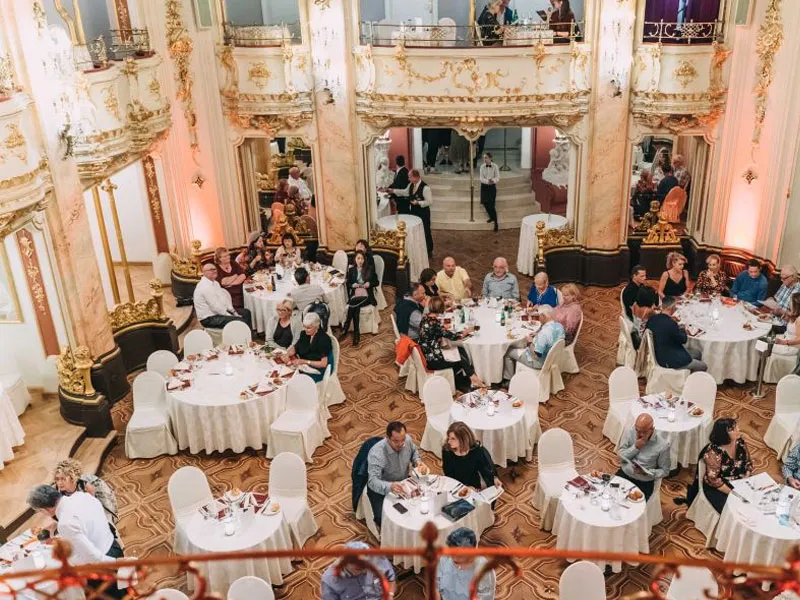
This is precisely where Prague's elite companion services offer something that no concierge desk or hotel wellness center can replicate. A companion who knows the city intimately can structure those critical first hours with the kind of purposeful, gently stimulating activity that keeps the mind engaged without overwhelming a fatigued executive. A late afternoon walk through Malá Strana. A curated aperitif at a quiet wine bar in Vinohrady. A conversation-rich early dinner in a private dining room in the Old Town. Each element serves a dual purpose: it is genuinely pleasurable, and it is quietly therapeutic.
The Companionship Advantage: More Than Pleasant Company
What distinguishes an elite Prague companion from a standard city guide or corporate concierge is the quality of presence they bring to every interaction. These are individuals selected not only for their cultural fluency and linguistic range — many speak three or more languages fluently — but for their capacity to read a client's energy and adapt accordingly.
An executive who is running on four hours of sleep and pre-meeting anxiety does not need a packed itinerary. They need a companion who can hold an intelligent, low-pressure conversation over coffee, who can suggest a quiet gallery rather than a crowded tourist landmark, and who understands instinctively when silence is more restorative than stimulation.
This kind of emotional attunement is, frankly, rare. It is not something a hotel app or a curated city guide can provide. And for executives accustomed to environments where every interaction carries professional weight, the relief of spending time with someone genuinely focused on their comfort and recovery — without agenda — is itself a form of rest.
The First Dinner as a Strategic Asset
For many executives visiting Prague on business, the first significant social engagement is a client dinner or a professional reception. The quality of their performance at that event is directly influenced by how the preceding hours were spent.
Consider two scenarios. In the first, an executive checks into their hotel, attempts to rest, fails to sleep, orders room service, and arrives at dinner tired, mildly disoriented, and still mentally somewhere over the Atlantic. In the second, they spend the afternoon in the company of an engaging, culturally informed companion who has gently anchored them to Prague's rhythms, offered context about the city's business culture, and ensured they arrive at the table rested, oriented, and genuinely present.
The difference is not subtle. Clients who have experienced both scenarios describe the second as transformative — not in any dramatic sense, but in the quiet, compounding way that preparation always distinguishes the professional from the merely adequate.
Booking for Recovery: A Practical Framework
For executives considering this approach, a few practical principles are worth noting.
First, timing matters. Booking a companion to meet you at the airport or hotel upon arrival maximizes the benefit. The first two to three hours after landing set the tone for the entire adjustment period.
Second, activity selection should be collaborative. The best companions at Prague Companions are skilled at co-designing an itinerary that balances stimulation with recovery — they will not push a fatigued client toward high-energy environments, and they will not leave them to stagnate in isolation either.
Third, communication about your schedule is essential. A companion who knows you have a critical breakfast meeting at eight the following morning will structure the evening accordingly, ensuring you are in bed at a sensible local hour rather than inadvertently extending your wakefulness past the point of benefit.
The Competitive Edge Hidden in Plain Sight
In a business culture that celebrates optimization — biohacking, executive coaching, performance nutrition, sleep technology — it is somewhat surprising that strategic companionship has not entered the mainstream conversation sooner. The evidence for its value is not anecdotal. It is grounded in what we know about human neurology, social engagement, and the conditions under which high-performing minds function best.
Prague's elite companions are, in this sense, an underutilized competitive asset. For the executive willing to approach the first 48 hours in the city not as a period to endure but as a window to leverage, the returns — in clarity, in presence, in the quality of every professional interaction that follows — are considerable.
Arriving sharp is not a matter of luck. It is a matter of strategy.