The Connection Prescription: How Intentional Companionship Is Becoming a Cornerstone of Executive Wellness

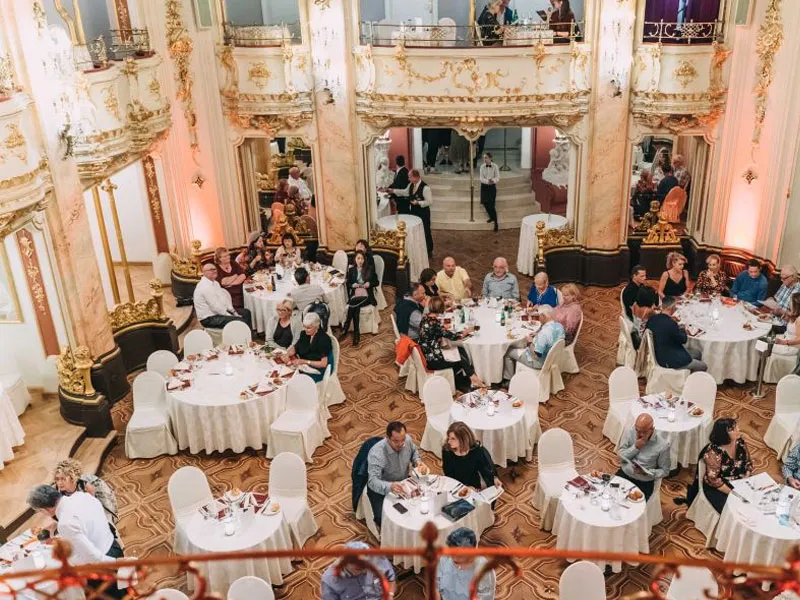
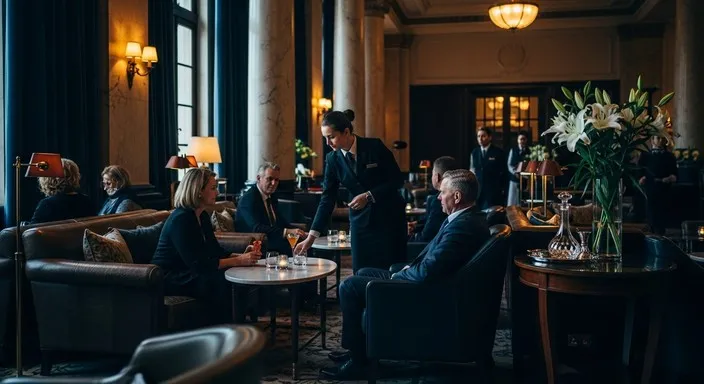
Photo: executive relaxing elegant Prague evening sophisticated wellness lifestyle, via static.wixstatic.com
The American wellness industry crossed the $480 billion threshold not long ago, and it keeps climbing. Executives across the country invest heavily in sleep optimization, biometric tracking, executive coaching, mindfulness retreats, and nutritional protocols—all in pursuit of the sustained high performance that demanding careers require. Yet for all this investment, one of the most well-documented drivers of human wellbeing remains conspicuously absent from most professionals' wellness strategies: genuine human connection.
This is not an oversight born of ignorance. Most high-performing professionals understand, at least intellectually, that social isolation carries serious health consequences. The Surgeon General's 2023 advisory on loneliness in America made the stakes explicit: chronic disconnection carries health risks comparable to smoking fifteen cigarettes a day. For executives who spend the majority of their professional lives in transactional, performance-oriented social environments—and their personal lives managing the collateral demands of career success—truly restorative human connection can become genuinely difficult to access.
Which is why a growing number of discerning professionals, particularly those who travel extensively for work, are beginning to approach companionship not as an indulgence, but as a deliberate wellness practice.
The Burnout Paradox
Burnout, as most professionals now understand it, is not simply the result of working too many hours. Research from organizational psychologists at institutions like Stanford and the Mayo Clinic consistently identifies emotional depletion—the exhaustion of navigating constant performance demands without adequate relational replenishment—as the more fundamental driver.
The executive who flies to Prague for a week of high-stakes meetings is not merely physically fatigued. She is socially depleted. Every interaction in her professional schedule is, by definition, goal-oriented. Every conversation is in service of an outcome. The cumulative effect of this relentless instrumentalization of social life is a kind of emotional attrition that sleep, exercise, and meditation can partially address—but cannot fully repair.
What repairs it, according to a substantial body of psychological research, is connection that is genuinely reciprocal, unhurried, and free from professional stakes. The kind of conversation where one is neither performing nor being evaluated. Where wit is welcomed for its own sake, curiosity is indulged without agenda, and the simple experience of being genuinely attended to—without the shadow of hierarchy or competitive interest—is allowed to do its restorative work.
Intentionality as the Distinguishing Variable
The wellness framing of companionship depends entirely on a distinction that is worth making carefully: the difference between transactional and intentional social experience.
Transactional social interaction—the kind that dominates most professional lives—is characterized by implicit exchange. Attention is given in expectation of something in return. Warmth is strategic. Presence is conditional. These dynamics are not inherently problematic; they are simply the natural grammar of professional life. But when they constitute the entirety of one's social experience, the human need for non-transactional connection goes unmet.
Intentional companionship, as it is increasingly understood and practiced among discerning professionals, operates on different terms. The engagement is chosen deliberately, approached with genuine presence, and structured—however informally—around the client's actual needs in a given moment. Sometimes that means stimulating intellectual conversation over a long dinner in one of Prague's extraordinary historic restaurants. Sometimes it means the companionable silence of a walk through Malá Strana as the city quiets after midnight. Sometimes it means simply having someone genuinely interested in listening.
The intentionality is not incidental. It is precisely what separates a restorative experience from one that merely fills time.
What the Research Suggests
The psychological literature on social connection and performance is, at this point, fairly unambiguous. High-quality social interaction—defined not by frequency but by depth and authenticity—is associated with lower cortisol levels, improved cognitive function, greater emotional resilience, and meaningfully better decision-making under pressure.
For executives whose professional value is substantially tied to their cognitive and emotional performance, these are not trivial outcomes. The ability to enter a high-stakes negotiation having genuinely rested—not just physically, but emotionally—represents a real competitive advantage. The capacity to make clear-headed decisions under pressure, rather than reactive ones driven by accumulated stress, has direct professional consequences.
Investing in experiences that reliably produce these outcomes is, by any reasonable framework, a rational professional decision. The more interesting question is why it has taken so long for the wellness conversation to acknowledge this.
Prague as a Context for Renewal
There is something about Prague specifically that amplifies the restorative potential of intentional companionship. The city operates at a different pace than the American urban environments most executives call home. Its beauty is not aspirational or performative—it is simply present, accumulated across centuries of architectural and cultural achievement, indifferent to the pressures of modern professional life.
To experience Prague in the company of someone who genuinely knows and loves the city—who can offer context, history, and personal perspective on what you are seeing—is to access a quality of presence that is genuinely difficult to manufacture through conventional tourism. The city becomes less a backdrop and more an experience. And that shift, from passive observation to genuine engagement, is itself a form of renewal.
Elite companions in Prague's premium market understand this dynamic intuitively. They are not tour guides offering curated information. They are cultivated individuals who bring their own genuine relationship with the city to every engagement—and who understand that their most valuable contribution is often simply the quality of their attention.
Redefining What Recovery Looks Like
The executives who are most effectively integrating companionship into their wellness practices tend to share a particular characteristic: they have stopped waiting for connection to happen incidentally and started treating it as something worth pursuing deliberately.
This is, in many respects, the same shift in mindset that transformed physical fitness from an afterthought into a non-negotiable professional priority over the past three decades. The executives who were first to take their physical health seriously as a professional asset were regarded, initially, as eccentric. Now, the executive who does not prioritize physical wellness is the anomaly.
The same trajectory appears to be unfolding around emotional and social wellbeing. The professionals who are ahead of this curve—who have recognized that sustainable high performance requires genuine relational replenishment, and who have made the intentional choices necessary to secure it—are not indulging themselves. They are investing in their most important professional instrument: themselves.